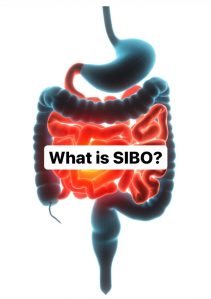
 What is SIBO?
Despite what you read elsewhere (and what I have posted in the past..) SIBO is actually quite rare. In order to suspect SIBO and justify performing testing, we must first rule out a number of conditions that are a lot more common and much more likely to be the cause of an individual’s symptoms. Examples include irritable bowel syndrome, Celiac disease and inflammatory bowel disease.
Small intestinal bacterial overgrowth (SIBO) occurs when gut bacteria become too plentiful in the small intestine. The hallmark symptom is diarrhea that is otherwise unexplained.
In a healthy gut there are huge numbers of bacteria in the colon and relatively small numbers of bacteria in the small intestine. In a healthy gut, colonic bacteria feed on the indigestible components of our food, like fibre, fermenting it to produce compounds that are beneficial to our health.
The small intestine is a 20 foot long tube between your stomach and large intestine. This is where food is broken down so that you can absorb nutrients through the wall of the small intestine. If bacteria become too plentiful in the small intestine, they are given access to an all you can eat buffet that results in a larger than normal amount of fermentation in the wrong segment of the gut. This misplaced fermentation contributes to symptoms, most notably diarrhea and bloating.
SIBO occurs due to an underlying dysfunction of intestinal motility which results in stasis. Under normal circumstances, the small intestine contracts and relaxes in an organized manner, constantly moving undigested food particles and gut bacteria downstream to the colon. When normal intestinal motility becomes compromised, bacteria may be permitted to grow to excessive numbers in the wrong segment of the gut.
Signs and symptoms of SIBO overlap with many other conditions but typically include diarrhea. Weight loss and nutrient deficiencies may occur in severe cases.
Risk Factors for SIBO:
- anatomical changes due to intestinal surgery or stricturing conditions like Crohn’s disease
- long term use of proton pump inhibitors
- medications that alter motility i.e. opioids, anticholinergics
- conditions that alter gastrointestinal motility i.e. advanced diabetes
- impaired secretion i.e. low stomach acid, gall bladder removal, pancreatic insufficiency
- inflammatory bowel disease (Crohn’s disease, ulcerative colitis)
- conditions of malabsorption such as celiac disease, alcoholism
How is SIBO diagnosed?
Glucose breath testing is the test of choice at the present time. It is non-invasive and measures abnormal gasses in breath samples after the ingestion of glucose. Lactulose breath testing is often recommended but is NOT supported by research and should not be used as it results in a very high number of false positives. If you were told you have SIBO based on a lactulose breath test, it is important to get another opinion.
Here are some frequently asked questions about small intestinal bacterial overgrowth:
Q: My physician or gastroenterologist performed imaging and said there is nothing wrong but I still have symptoms. Is it possible that I have SIBO?
A: You cannot see SIBO with diagnostic imaging like an ultrasound, x-ray, CT scan, MRI, endoscopy or colonoscopy. Small intestinal culture techniques are considered the gold standard for diagnosis in a research setting, but since they are invasive and expensive, they are not available in clinical practice. Physicians in Ontario rarely perform glucose breath tests and this means that a typical workup by a family doctor or gastroenterologist does not rule out SIBO. If your main symptom is diarrhea and it is not responding to treatment the way we would expect, it may be worth considering SIBO testing.
Q: My physician or gastroenterologist told me I have IBS. Could I have SIBO?
A: Although one poor quality study found that people with IBS were allegedly way more likely to have SIBO, this study used the wrong test to come to a diagnosis of SIBO in the first place (lactulose vs. glucose breath test). As a result, this study grossly overestimated the prevalence of SIBO in people with IBS such that we were led to believe that SIBO was really common in those with IBS. Even though this has now been debunked, the belief that a lot of people with IBS have SIBO persists. Most people with IBS do not have SIBO. If they obtain breath testing, they may see a false positive result and pursue the wrong treatment.
Q: Is there a cure for SIBO?
A: It depends on the underlying cause of the case of SIBO in question. Remember, the bacterial overgrowth is a side effect of an underlying condition affecting gut motility. If that underlying condition or root cause can be successfully treated, it may be possible to put SIBO into remission by simply killing off the bacterial overgrowth. When the underlying cause of SIBO does not go away, SIBO is likely to relapse after a period of time even if the bacterial overgrowth is successfully eradicated by antibiotics. This does not mean treatment is useless, it just means that treatment may need to be repeated periodically to manage symptoms.
Q: What does SIBO treatment look like?
A: The successful treatment of SIBO typically requires a course of the antibiotic rifaximin, in addition to addressing the underlying condition or risk factors that allowed bacterial overgrowth to occur in the first place. I used to recommend botanical antimicrobials but studies have found these are not strong enough to eradicate SIBO. Herbal medicines and nutraceuticals may be of benefit in managing certain symptoms and improving motility.
Q: I can’t tolerate FODMAPs. Could I have SIBO?
A: Foods containing high levels of fermentable carbohydrates (FODMAPs) tend to exacerbate symptoms of SIBO but these foods also trigger symptoms in people with other conditions, like IBS, which is far more common than SIBO. Remember, most people with IBS do not have SIBO. We cannot make conclusions about the likelihood of SIBO based on digestive symptoms or dietary restrictions alone.
Q: Will a special diet cure SIBO? Do food choices cause SIBO?
A: No! Despite what you will read elsewhere, there is no special diet that will reliably cure SIBO. Dietary patterns will not cause SIBO, either. In some cases, the dietary restrictions suggested for SIBO treatment actually cause more harm than good – further harming digestive health and affecting mental health, too. Nutrition is important and there are considerations when treating SIBO, but it is important to work with a medical professional who understands what food can do – and also what it cannot do.
The Low FODMAP Diet, Specific Carbohydrate Diet and Elemental Diet are often recommended to treat SIBO. The rational is that these diets reduce or completely eliminate fermentable carbohydrates for a period of time in order to “starve gut bacteria” but there is inadequate research to support these claims.
This post was updated on February 9th, 2024 and contradicts information that was previously shared, because science. When we know better, we can do better.
 Aranka Jones
You must be logged in to post a comment.